
During hot weather, water-rich salads can be a great way to contribute to hydration. VfL Roving Chef Alex gives some ideas for nutritious light meals.
In hot weather, many of us prefer light meals and salads. Hot weather can reduce our appetites, and our bodies focus on cooling themselves. With a little thought, salads can be both delicious and nutritient-dense.
Water-rich salads can contribute to hydration during hot weather, although it's still important to drink plenty of fluids throughout the day.
Getting the balance right
Lettuce, tomatoes, cucumbers and radishes work well in salads. They are good sources of water and provide a range of vitamins and minerals. Although healthy, they are low in protein and calories. Nutrient-dense foods should also be included when you have a small appetite.
Nutrient-dense foods improve the overall nutritional value of meals, and include seeds, nuts and beans. They also include foods made from these ingredients, such as nut burgers and tofu. Protein powder can also be used to increase the protein content of some dishes.
Many manufactured foods are fortified with vitamins and minerals. Many people eat fortified foods regularly, such as breakfast cereals or some breads. At home, you can also increase the protein content of dishes by stirring protein powder into suitable sauces or soups.
With this in mind, it can be easy to boost the nutritional value of salads by adding protein-rich ingredients and foods that provide a range of vitamins and minerals.
See our website for my Powerhouse Salad recipe, which is packed with nutrients and great in hot weather. We have lots more salad recipes too.
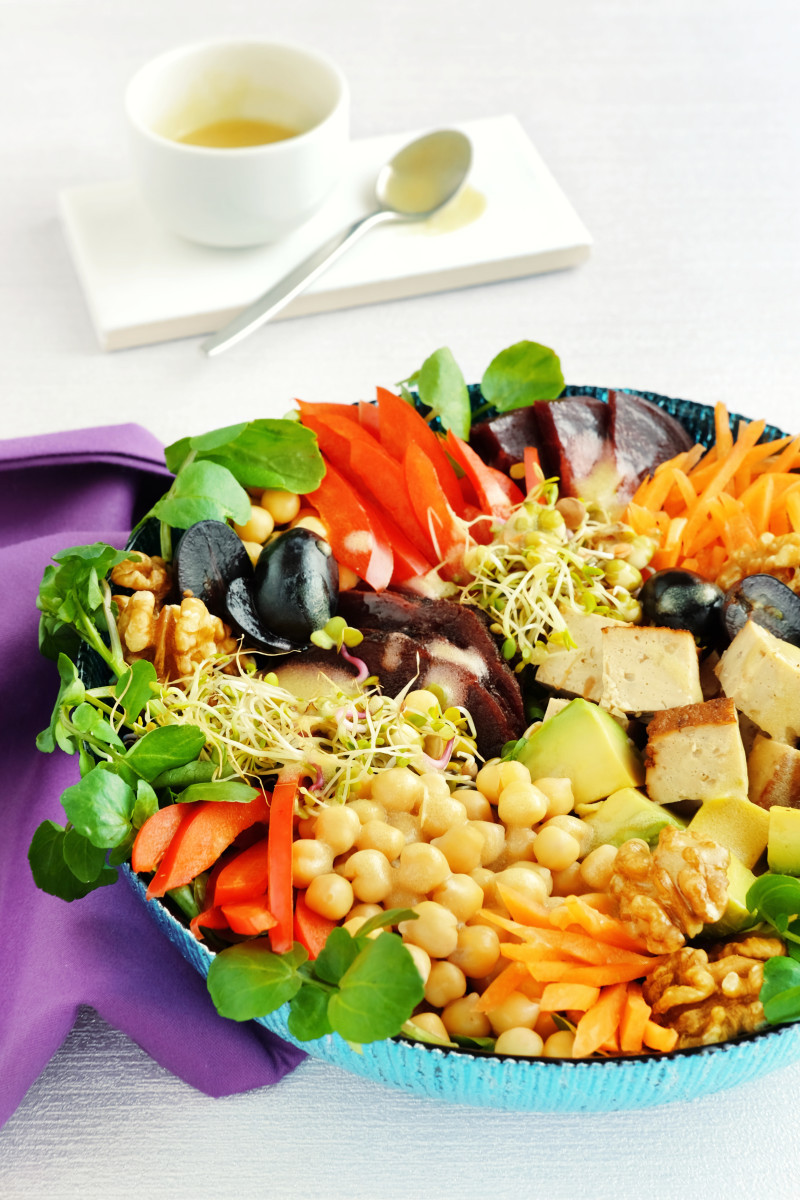
One of my other favourites is Roasted Cauliflower Salad with Tahini Dressing, which shows you really can use a wide range of ingredients beyond lettuce and tomatoes.
Ingredients to jazz up your salad
Vegetables – roasted peppers, courgettes, carrots, beetroot, cauliflower work very well. Give them a dressing of soya sauce, pepper, cumin and paprika while they roast to add extra flavour.
Fruit – grapes, apples, pears are all commonly used. Try orange, melon, peach or kiwi. Small amounts of fruit can add a nice splash of colour and sweetness.
Nuts – cashews, peanuts, almonds, walnuts and hazelnuts are good choices. A good source of healthy unsaturated fats, with protein and fibre.
Tofu – I know this is not everyone’s thing; if you are catering for someone, ask whether or not they like it first. These days, you can buy flavoured, pressed varieties. These are ready to eat, have a firm texture and a nice taste. A little dressing of soya sauce can enhance their flavour, or try one of the dressings listed below.
Beans – butter beans, chickpeas, adzuki beans, cannellini. All are available tinned from supermarkets. Simply rinse and thoroughly drain. Rich in fibre and a good source of plant protein.
Seeds are another nutrient-dense food, rich in healthy fats, protein and a range of vitamins and minerals. You can buy packs of seeds specifically to sprinkle onto salads.
Noodles and pasta (cooked and chilled) can add a twist to your salads. These add carbohydrates and a sense of satisfaction when you are eating them.
Sprouted seeds and beans can be a nutritious addition to salads, and easy to grow on a windowsill. You can also buy them ready to eat from the supermarket. Cress may have been the original sprouting seed for salads and sandwiches in the UK; sprouted broccoli, mung, and adzuki are also widely available.
Salad dressings
Salad dressings bring something special, giving your salad flavour, texture and mouthfeel. Depending on what you use, they can add nutritional benefits.
Shop-bought dressings are available and come in all sorts of varieties. The good news is that if you are vegan, or catering for vegans, there is a wide range to choose from, including vegan mayonnaise.
Vegan mayonnaise is particularly useful for caterers, because its taste and texture are similar to egg-based mayonnaise. It is great for potato salad, coleslaw, fruit salads and other cold salads.
Salad dressing ingredients
To make your own dressings, I recommend some ingredients below. This is where the fun and personalisation start.
Olive oil – although expensive, this has a great flavour and aroma. Replacing saturated fats with olive oil as part of a balanced diet may help support heart health. Use the posh ones for salad dressing and use the cheaper ones for cooking.
Vinegar – used on its own, this adds a sharpness to your salad, but it is often mixed with oil. Try different types of vinegar, such as a subtle change from white wine vinegar to cider vinegar. Balsamic and balsamic reduction have a sweet but sharp flavour. Delicious.
Date syrup – can add sweetness to salads, but because it is high in natural sugars, use it sparingly.
Pomegranate molasses – if you have not tried this, you are in for a treat. It has a sweet aromatic flavour. Great as a dressing for salads. With both date syrup and pomegranate molasses, you only need a small amount.
Orange juice – a small amount mixed with oil, mustard and a pinch of sugar makes a delicious twist on the classic French dressing. With many citrus fruits, including the zest adds flavour and vitamin C, which helps the absorption of iron. If you're using the zest, wash the fruit beforehand and only grate off the very edge of the fruit. If you use the pith, it will become very bitter.
Avocado – either chopped finely or blended with oil and vinegar, this creates a rich colourful dressing. Make this just before serving, because avocado has a tendency to discolour relatively quickly.
Fresh herbs – chopped into your dressing of choice, they add flavour and colour. Chefs like to blend herbs with oil in a food processor to create 'our chefs’ own dressing'. It’s really easy and can be done with a stick blender.
Peanut butter – try this dressing; it is easy to make and great for Asian-style salads or to spoon over tofu. 1 tbsp peanut butter, 1 tsp soya sauce, 1 tsp sweet chilli sauce, 1 tsp vinegar. Blend this together with approximately 3 tbsp water. My tip is to add the water a little at a time because the viscosity will depend on the brand of peanut butter.
Tahini – this is puréed sesame seeds, with a similar consistency to peanut butter. It has a slightly bitter but delicious flavour. Use the same recipe above but swap for the peanut butter. This dressing works well for salads containing roasted peppers, courgettes, couscous, or similar Middle Eastern ingredients.
Basic salad dressing recipe
For a basic dressing that does not require any 'fancy stuff', blend together 1 tbsp oil, 1 tsp vinegar, ½ tsp mustard and a pinch of sugar. Simple and delicious.
You can find more salad recipes on our website. Let’s hope that we have a long summer to enjoy.
Categories:
Recipes