V for Life Roving Chef, Ollie, visits a mobility shop and discusses how to adapt cookery equipment and methods to keep on cooking into later life.
Cooking is about more than food; it’s identity, independence, and the quiet pride of saying, “I made this.”
And if you experience barriers that prevent you from enjoying cookery, here are some ideas to restore some confidence, comfort, and joy.
Tools that empower
With a few clever adaptations, cooking can become easier and enjoyable again.
Recently, I visited a local mobility shop to explore what’s currently on the market. It was eye-opening to see just how many simple, thoughtful gadgets exist to support everyday cooking and eating.
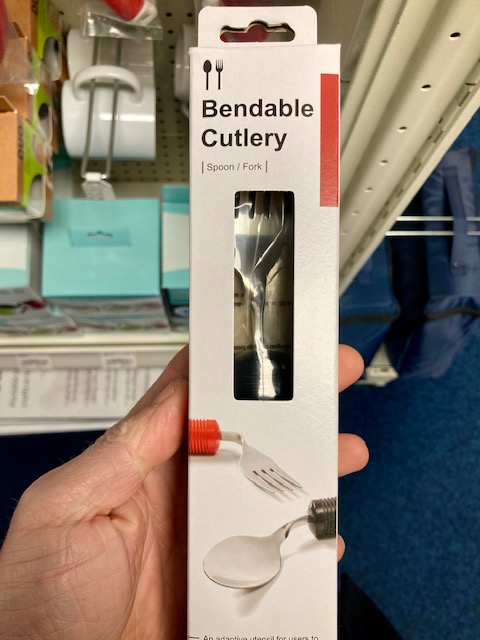
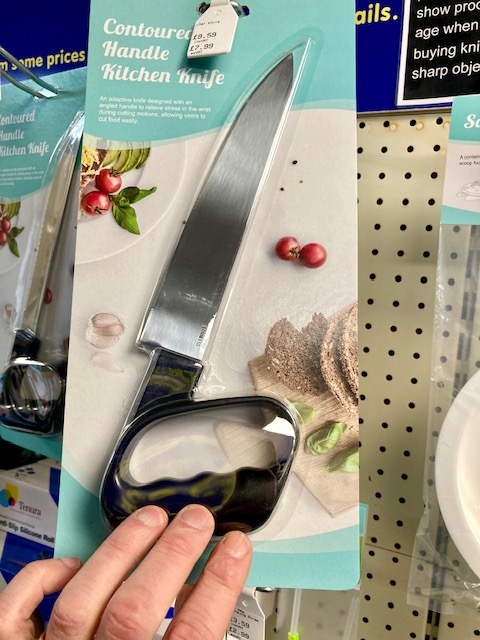
There were flexible spoons that bend to meet your grip, double-handled cups that offer stability, and L-shaped knives designed so you can cut using the strength of your arm instead of your wrist. Alongside them were jar openers, non-slip mats, kettle tippers, adaptable chopping boards, and other daily living aids that can turn a difficult task into a manageable one.

And technology can help too: talking kitchen scales, liquid level indicators that beep to prevent spills and large-print or tactile measuring jugs.
These aren’t luxury items. For many, they’re lifelines, tools that make cooking not only safer, but possible.
Rethinking the process
But it isn’t only about gadgets. Sometimes we have to rethink how we cook.
Breaking tasks into smaller steps can make a world of difference. Chop vegetables in the morning when energy is higher; cook later when you’re feeling steadier. Frozen or tinned veg often offer the same nutrition without the peeling and chopping. And one-pot cooking; stews, curries, and risottos can be game-changers; reducing effort and washing up.
And on days when cooking simply isn’t an option? That’s perfectly okay. Having a few ready meals or tins of soup to hand isn’t a failure – it's good planning, and it gives your body permission to rest.
The power of support
None of us should have to navigate these changes alone.
VfL maintains a directory of vegan and vegetarian meal delivery services across the UK. Whether hot, chilled, or frozen, these services can greatly help if you can’t cook every day.
Community initiatives can help, too. Schemes like Casserole Club (and similar projects) pair neighbours who love cooking with people who could use an occasional home-cooked meal. They’re not just about nourishment, they’re about connection.
Gill’s story
When conducting research for our suppliers directory, we spoke with Gill, who described the challenges she faced after falling ill. “I’ve found it very hard,” she shared. “I’ve been trying to find quicker, easier ways of doing things – cooking with fewer ingredients.”
But importantly, Gill didn’t stop cooking. She adapted. She simplified recipes; switched to frozen vegetables, and embraced shortcuts. And on the days she couldn’t manage, she used delivered meals.
Her story isn’t one of loss, it’s one of resilience and adjustment. A different way of cooking, but still her cooking.
Categories:
Articles
Life After Retirement